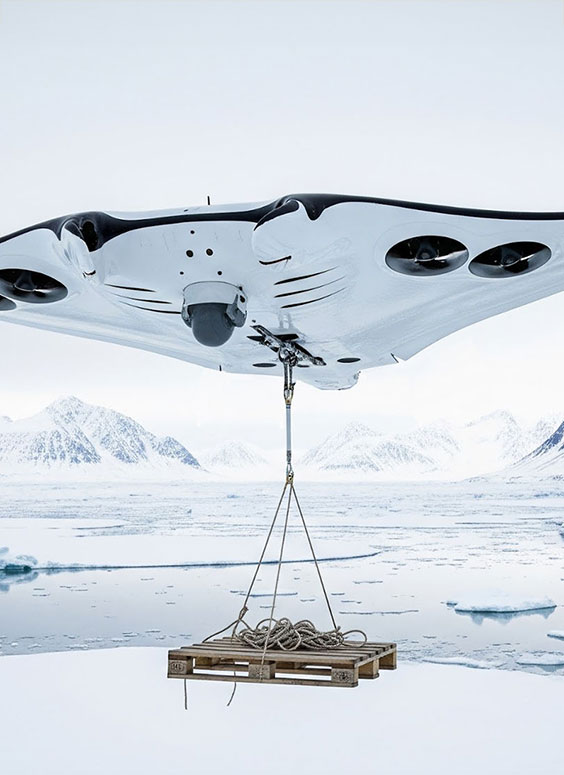
Our flagship uncrewed aircraft is a sub-25 kg blended-wing-body electrical takeoff and vertical landing (eVTOL) aircraft with vectored thrust and zero control surfaces. Designed for ISR, delivery, and tactical resupply.
Blended wing body: aerodynamic efficiency and low observability in a single airframe
Zero control surfaces: greater mechanical reliability and reduced maintenance burden
Vectored thrust: full VTOL capability with seamless transition to forward flight
Integrated payload bay: 4 kg capacity built into the wing, not underslung
Sub-25 kg class: operational regulatory pathway under CARs Part IX
Dual-use by design: Intelligence, surveillance and reconnaissance (ISR), logistics, tactical resupply, and commercial delivery


Our next-generation uncrewed aircraft platform, currently in concept development. Designed to extend the blended-wing-body architecture into heavier payload classes and longer-range mission profiles.
Blended wing body: the proven Pulshn airframe lineage, scaled for greater endurance and capacity
Expanded 1-ton payload class: designed for heavier cargo, extended sensor suites, and multi-role configurations
Precision touchdown capability for eVTOL and remotely piloted aircraft systems (RPAS) platforms in environments where GPS alone isn't enough. Our autonomous landing pad system closes the loop on uncrewed operations.
Multi-sensor fusion: reliable, repeatable landings in degraded and GPS-denied conditions
Platform agnostic: designed to integrate with third-party platforms as well as Pulshn aircraft
Dual-environment design: built for deployed defence scenarios and permanent commercial infrastructure

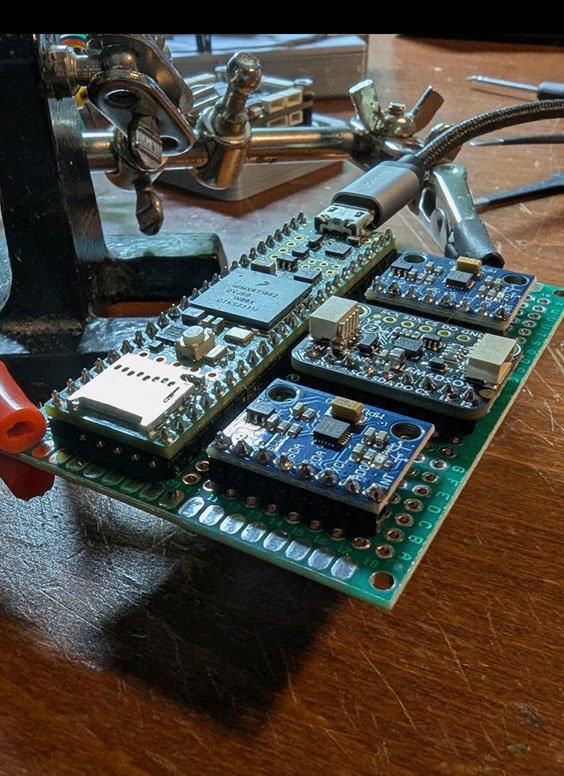
Custom printed circuit boards (PCBs) and embedded electronics designed to aerospace standards, for teams who need flight-grade hardware without the overhead of a full avionics programme.
Power distribution: designed for the weight, thermal, and vibration constraints of flight environments
Sensor integration: multi-sensor architectures built for reliability in demanding operational conditions
Flight control architecture: embedded systems designed for testability, manufacturability, and aerospace certification pathways